Marine Survey Technology
Divers vs. ROVs: When Underwater Work Still Needs a Human in the Water
It would be convenient if remotely operated and autonomous vehicles had simply made human divers obsolete. They haven't. What's actually happened is a division of labour: routine, deep, or hazardous work has shifted decisively to ROVs and AUVs, while a specific category of task — one requiring touch, judgement, and real-time improvisation — still belongs to a person in the water. Knowing which category a given job falls into is the actual skill.
The Physical Cost of Sending a Person Down
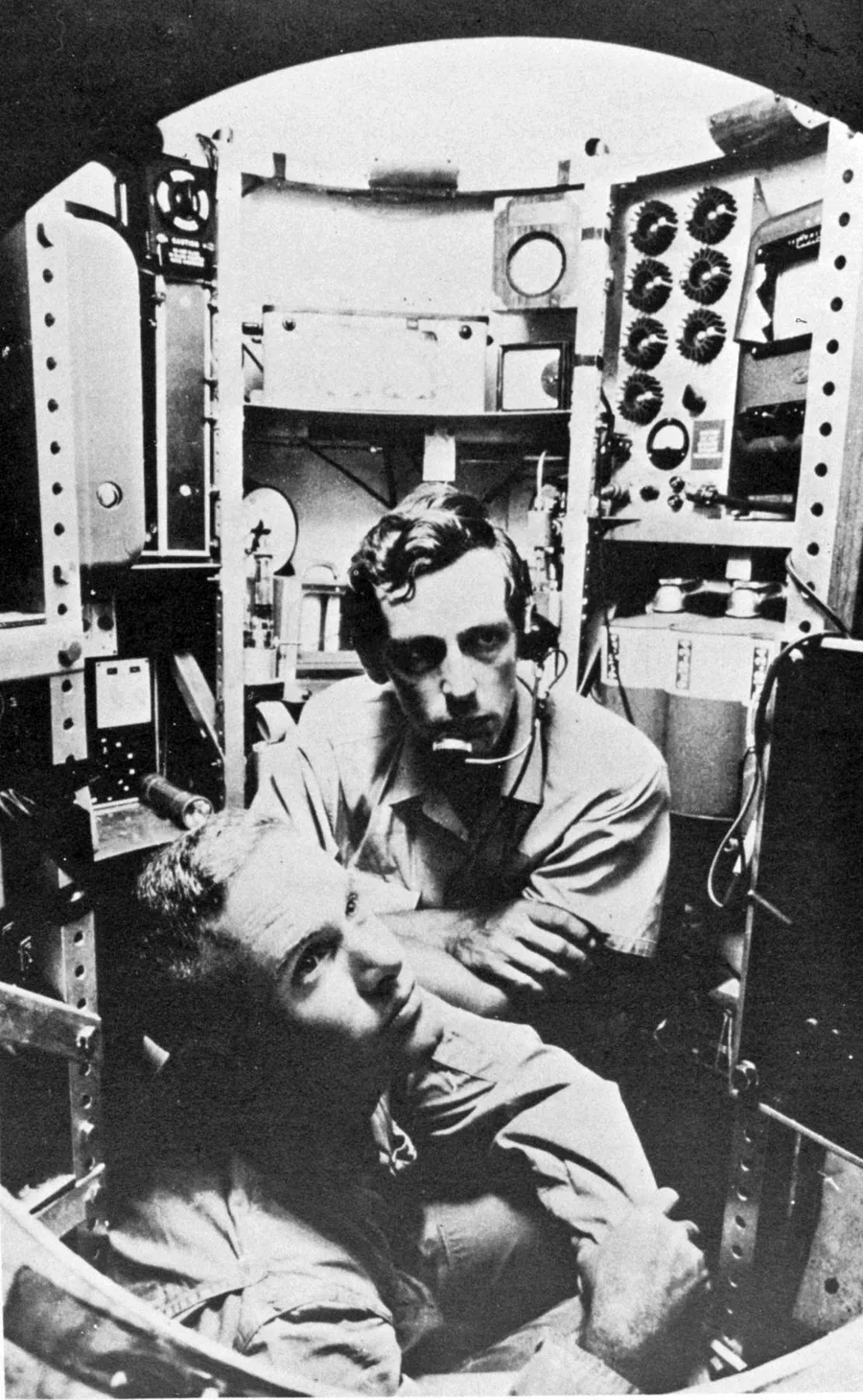
Saturation diving lets commercial divers work at depths from roughly 100 to over 300 metres — the deepest recorded commercial working dive reached 328 metres — but that capability comes with a fixed and substantial decompression penalty: roughly one day of decompression for every 30 metres of depth, plus one additional day. At the industry-accepted maximum of around 300 metres, that works out to a minimum of about 11 days of non-productive decompression time per dive rotation. Because that decompression obligation is essentially fixed once a diver is saturated to a given depth, regardless of whether the working dive itself lasted one day or fifteen, the economic logic of saturation diving pushes toward keeping divers down and working as long as possible once the decompression cost has already been committed. Day rates for smaller commercial diving jobs run roughly $1,500 to $5,000 USD, before specialised equipment and support personnel are added.
What Sending a Vehicle Instead Actually Removes
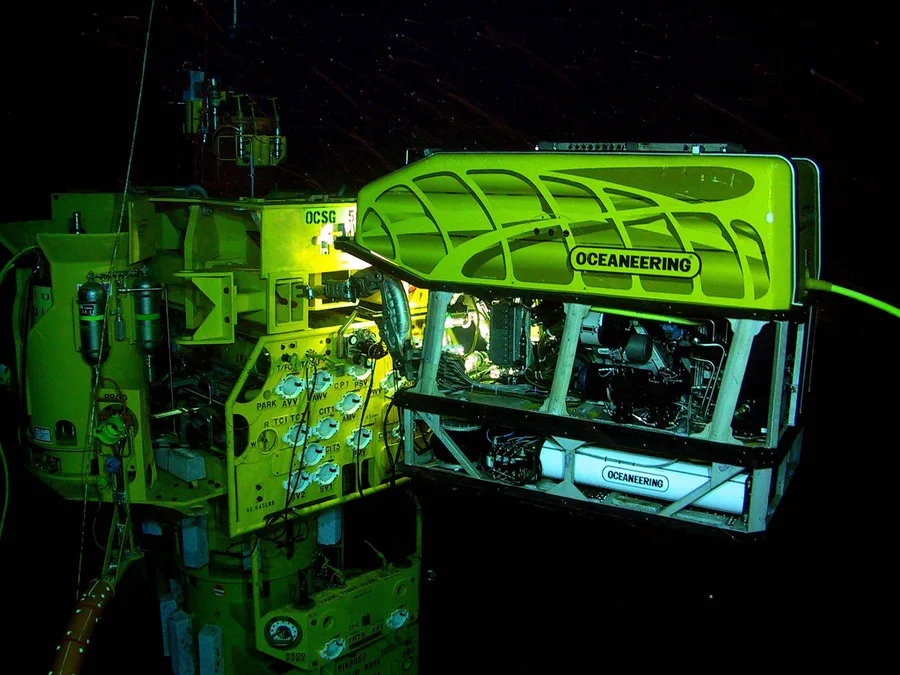
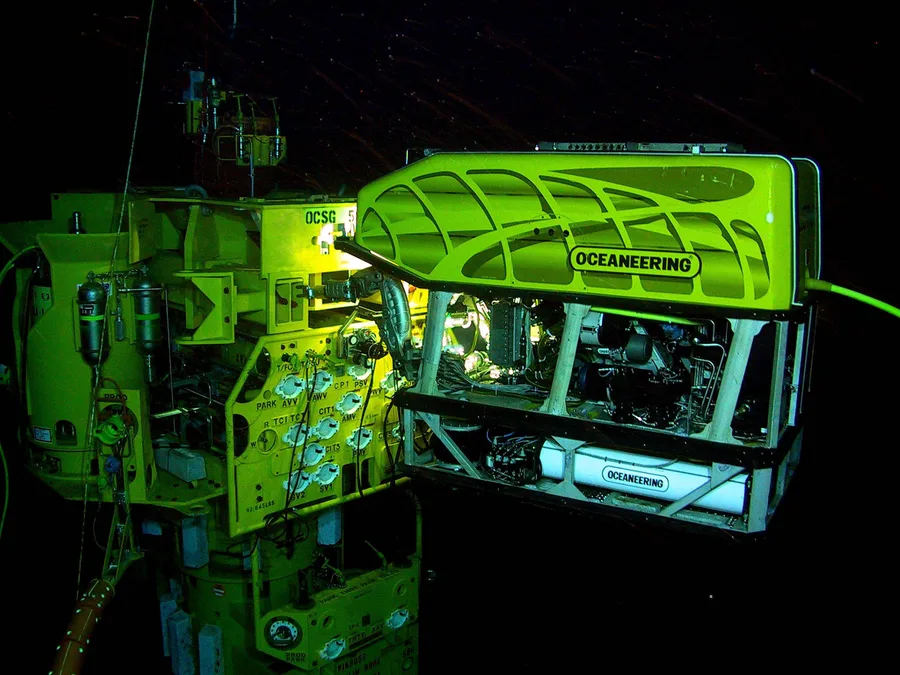
Replacing a diver with an ROV doesn't just save on decompression time — it eliminates an entire category of physical risk outright: decompression sickness, hypothermia in cold deep water, entanglement in debris or confined structures, and the consequences of an equipment failure at depth a person cannot simply swim away from. For hazardous environments specifically — contaminated water, confined structures, extreme cold — that risk elimination is often the deciding factor on its own, independent of cost or schedule.
A Practical Decision Framework
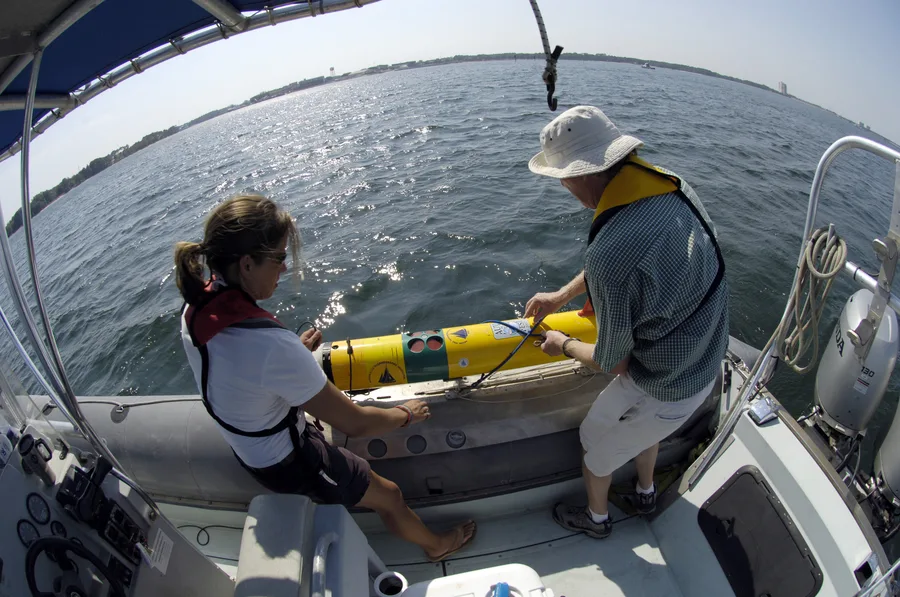
Choosing between a diver, an ROV, and an AUV in practice comes down to a handful of recurring questions rather than a single rule. Water clarity matters: in good visibility, either a diver or an ROV can deliver strong visual evidence, but in poor visibility an ROV working with sonar becomes the more defensible choice since it isn't relying on a diver's own eyes in the dark. Scope and coverage matter too — a small, localised job suits a diver or ROV equally well, while mapping a large corridor is better handled by an AUV doing a first-pass screening survey, with an ROV following up only where the AUV flags something worth a closer look. Where a decision genuinely needs a number — wall-loss measurement, cathodic protection performance — the job calls for ROV-mounted measurement tooling built for repeatability, not a diver's visual estimate. And inspection grade itself scales the choice: general screening favours AUV or ROV efficiency, confirmation-level inspection is an ROV's strength, but decision-grade inspection, the kind a client will act on directly, still often needs the access and judgement only a diver or a very capable ROV pilot can provide on-site.
Where Dexterity Still Wins Outright
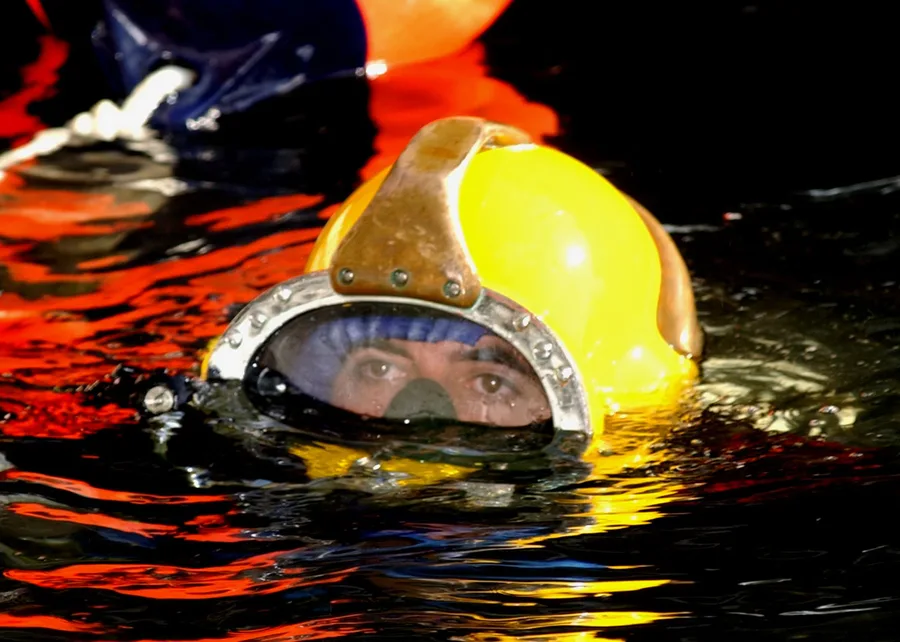
The clearest illustration of where a human still has to be in the water is military clearance diving: tasks like placing a shaped charge to disarm a mine, or examining and disrupting a waterborne improvised explosive device, remain human work because they demand what one analysis describes as "high fidelity perception and dexterous intervention capabilities not previously available through a remote solution." That same logic scales down to civilian commercial diving — intricate manual manipulation, real-time problem-solving under changing conditions, and close tactile assessment are still squarely a diver's domain, with ROVs typically configured for a specific mission rather than the open-ended adaptability an unexpected situation demands.
The Real Model Is Hybrid, Not Either/Or
The most effective operational pattern in practice isn't choosing divers or ROVs — it's sequencing them: deploy an ROV or AUV first for preliminary survey and screening, then bring in a diver specifically for the tasks that survey reveals need hands-on, dexterous work. Neither replaces the other; each is being used for the narrower set of tasks it is actually better suited to.
References
- Deep Trekker, "Commercial Divers vs ROVs: A Comparative Analysis," https://www.deeptrekker.com/resources/diver-versus-rov
- NWE Group, "Underwater Inspection Methods: Diver Vs ROV Vs AUV," https://nwegroup.no/underwater-inspection-methods-standards-deliverables-decision-matrix/
- gCaptain, "1,000 Feet Below the Surface: The Extraordinary World of Saturation Diving," https://gcaptain.com/1000-feet-below-the-surface-the-extraordinary-world-of-saturation-diving/
- Divers Alert Network, "Saturation Diving," https://dan.org/alert-diver/article/saturation-diving/
- Reach Robotics, "Top Uses of Underwater ROV Manipulators," https://reachrobotics.com/blog/top-uses-for-underwater-manipulators
Related Articles