Platform & Survey Operations
Passive Acoustic Monitoring: Listening for Whales Before the Airguns Fire
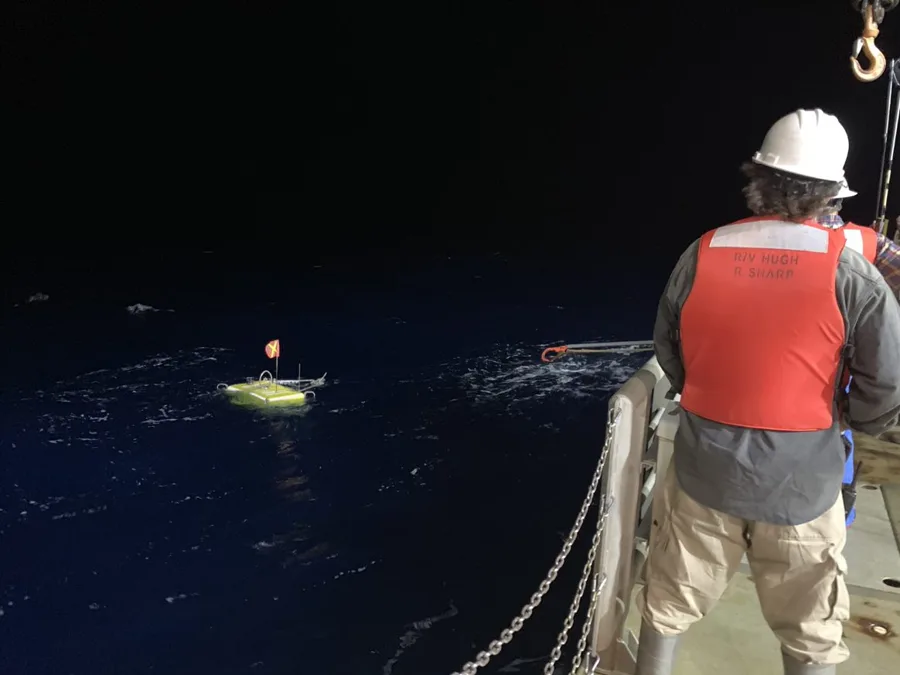
Every instrument covered elsewhere on this site — side-scan sonar, sub-bottom profilers, multichannel seismic streamers — is active: it sends sound into the water and listens for what bounces back. Passive Acoustic Monitoring (PAM) inverts that logic entirely. It sends nothing. A PAM system is simply a hydrophone, or an array of them, listening continuously for one thing in particular — the vocalisations of marine mammals — so that a seismic survey's own active sound sources can be silenced before they cause harm.
Why an Airgun Survey Needs an Ear, Not Another Source
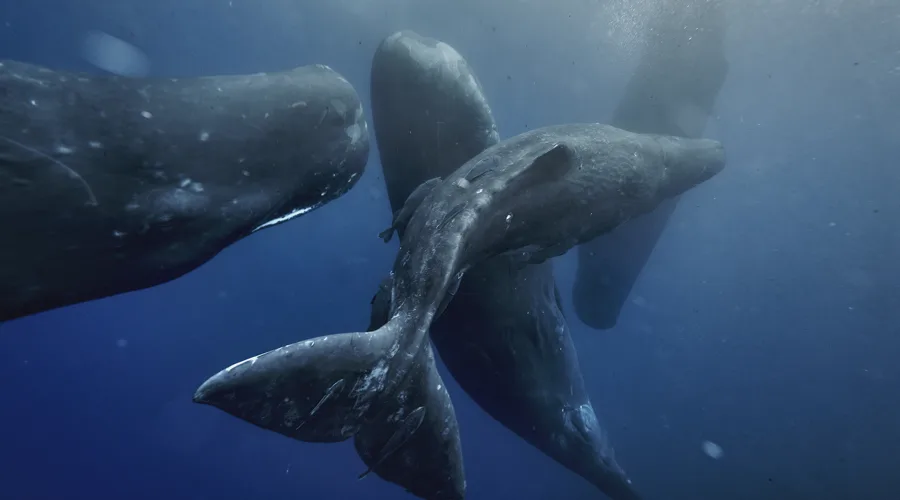
Marine seismic surveys generate some of the loudest anthropogenic sound routinely put into the ocean, and regulators in most jurisdictions with active oil and gas or offshore wind seismic programmes require operators to demonstrate that marine mammals are not present in a defined zone around the source before firing begins. A visual Marine Mammal Observer (MMO) can only do half that job — night, fog, and rough sea state all defeat a pair of eyes on a bridge wing, and many species surface too briefly or too rarely to be reliably seen at all. PAM closes that gap because sound, unlike light, travels efficiently through seawater over long distances regardless of weather or time of day, and vocal species like sperm whales and dolphins are, acoustically speaking, hard to hide.
Detection Range Depends Entirely on the Species
A 2021 set of minimum PAM recommendations jointly issued by NOAA and the U.S. Bureau of Ocean Energy Management for offshore wind monitoring lays out just how differently species show up on a hydrophone. Harbor porpoise clicks, at frequencies around 115–140 kHz, are detectable to only about 0.5 km. Dolphin whistles carry to roughly 6 km. Sperm whale clicks and North Atlantic right whale upcalls fall into a detection band reaching about 10 km. Blue and fin whale songs, at the low end of the spectrum, can in principle be picked up from 20 to 200 km away. The same recommendations set concrete performance bars for any PAM system used to trigger a real-time operational decision: a false-detection rate of 10% or lower and a missed-detection rate of 50% or lower, both measured over daily time scales — numbers chosen specifically because an automated system feeding directly into a shutdown decision has to be trustworthy enough that operators don't start ignoring its alerts.

How Mitigation Actually Runs
In UK waters, towed PAM was first trialled in 1998 and formally folded into the Joint Nature Conservation Committee's (JNCC) seismic survey mitigation guidelines in 2002; a dedicated JNCC standard for PAM deployment followed in December 2023. The mechanics of the guidelines are procedural rather than exotic: a pre-shooting visual search of the mitigation zone before any airgun use, a "soft start" that ramps the source up gradually — typically over 20 to 40 minutes — to give any animals nearby time to move off before full source level is reached, and an immediate delay or shutdown if a marine mammal is detected, whether by eye or by ear, inside the zone. Where visual observation is degraded by darkness or weather, PAM frequently becomes the only mitigation actually operating — in one JNCC-reported stretch between 2014 and 2019, PAM alone covered daytime monitoring on 189 separate occasions when conditions ruled out a visual watch.
Case in Point: Detecting Whales From Inside the Streamer Itself
CGG's Oceanic Vega ran a 14,500 km² broadband seismic survey of Brazil's Barreirinhas Basin on the Equatorial Margin beginning in late 2015, towing Sercel Sentinel solid streamers. In 2016, a PAM system was operated aboard the vessel specifically as a field validation trial, with a twist: rather than relying only on a conventional towed hydrophone array, the trial explored automatic detection of humpback whale moans and automatic localisation of sperm whale click trains using a wide sensor network integrated directly into the seismic cables already in the water. The trial's own reported difficulty is instructive — whales dive and vocalise hundreds of metres down, which makes horizontal-plane localisation genuinely hard even with a dense sensor network — but the underlying result still demonstrated that infrastructure already being towed for geophysical purposes could double as a marine mammal detection network, rather than requiring an entirely separate monitoring system.
Regulation Is Still Tightening, Not Settling
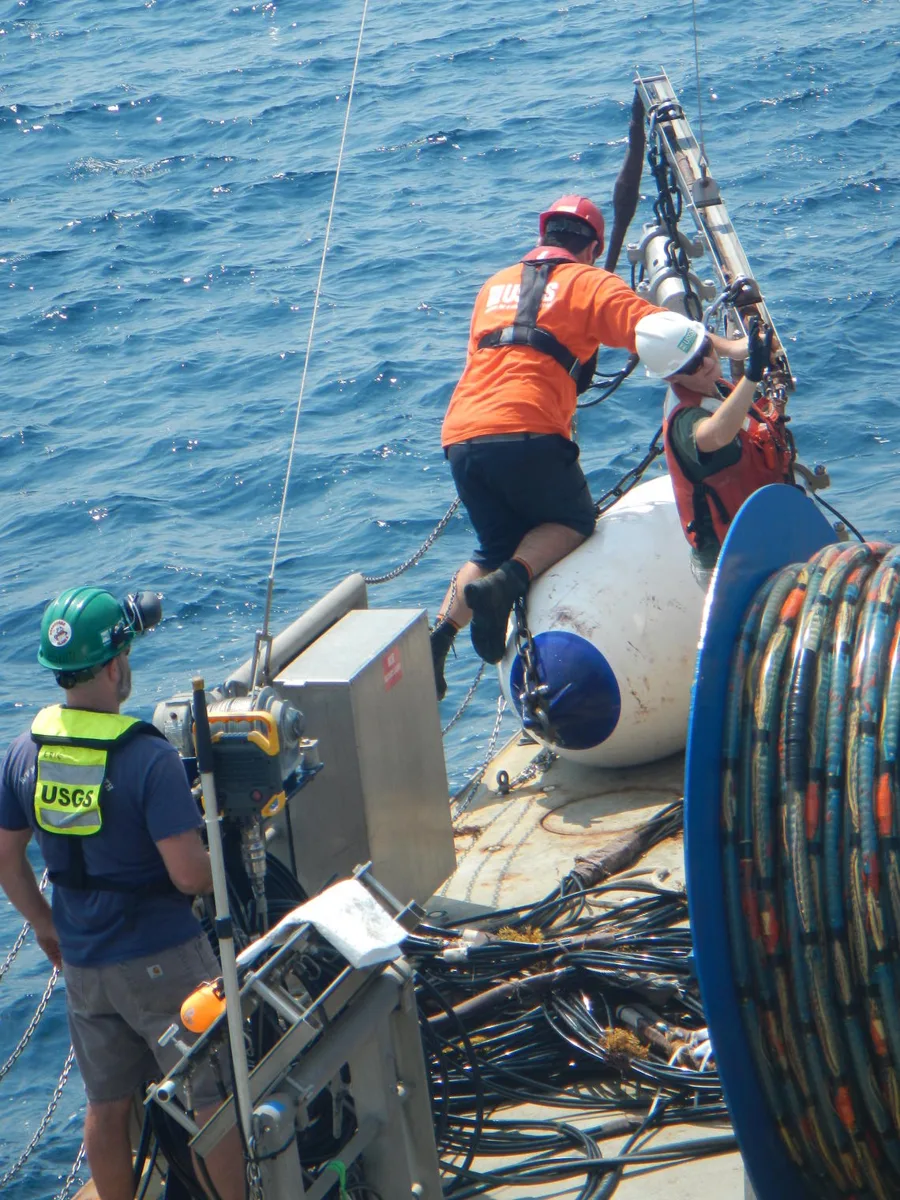
Brazil's more recent seismic regulations treat PAM as an independent, round-the-clock monitoring method in its own right rather than a supplement to visual observation, a stricter standard than most other jurisdictions currently apply and one that has required operators to rethink crewing and equipment redundancy for PAM specifically. The direction of travel elsewhere is similar: JNCC's 2023 PAM-specific guidance and its ongoing standardisation workshops point toward PAM shifting from an optional add-on to an explicitly required, independently audited layer of mitigation — a passive instrument taking on an increasingly active role in whether an active survey is allowed to proceed at all.
References
- Southall, B. et al., "NOAA and BOEM Minimum Recommendations for Use of Passive Acoustic Listening Systems in Offshore Wind Energy Development Monitoring and Mitigation Programs," Frontiers in Marine Science, https://www.frontiersin.org/journals/marine-science/articles/10.3389/fmars.2021.760840/full
- Joint Nature Conservation Committee, "JNCC Guidelines for Minimising the Risk of Injury to Marine Mammals from Geophysical Surveys," https://jncc.gov.uk/resources/e2a46de5-43d4-43f0-b296-c62134397ce4
- Joint Nature Conservation Committee, "Standardisation of Passive Acoustic Monitoring — Workshop Report," https://data.jncc.gov.uk/data/7090296c-7feb-48eb-824e-8c28176c7da1/pam-workshop-report-2021.pdf
- "Automatic Detection of Humpback Whales and Localization of Sperm Whales during Marine Seismic Survey," 15th International Congress of the Brazilian Geophysical Society, https://sbgf.org.br/mysbgf/eventos/expanded_abstracts/15th_CISBGf/Automatic%20Detection%20of%20Humpback%20Whales%20and%20Localization%20of%20Sperm%20Whales%20during%20Marine%20Seismic%20Survey.pdf
- "Passive Acoustic Monitoring During Seismic Operations in Brazil: Addressing Emerging Challenges from Strict Regulations," EarthDoc, https://www.earthdoc.org/content/papers/10.3997/2214-4609.202210540
- World Oil, "CGG to start 3D survey in Brazil's Barreirinhas basin," https://www.worldoil.com/news/2015/10/22/cgg-to-start-3d-survey-in-brazil-s-barreirinhas-basin
Related Articles
Environmental Baseline Survey: The Other Data Set Every Offshore Project Needs
Multichannel Seismic Reflection in Practice: The Coelacanth Discovery in the Gulf of Mexico